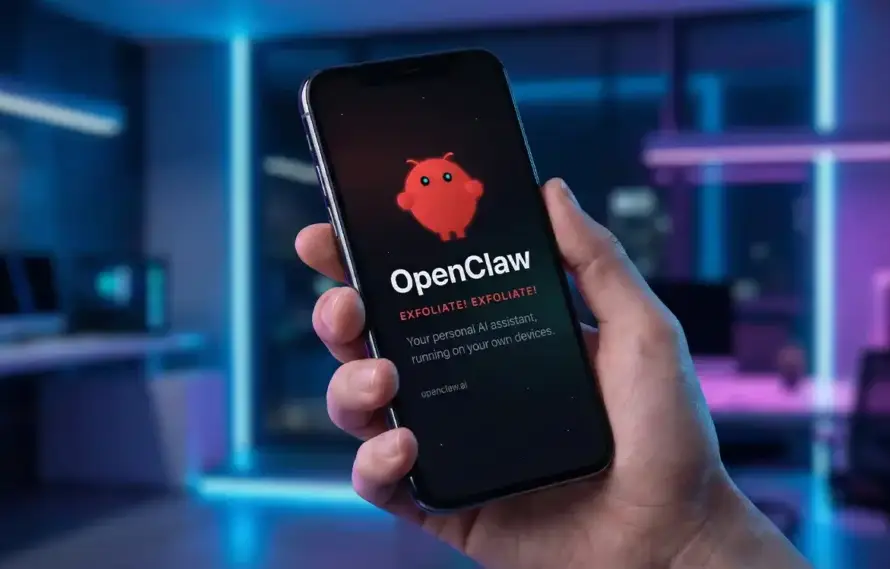
The arrival of Memubot introduces a serious new contender in the AI automation landscape and immediately sparks comparisons with Openclaw. Both platforms target agentic workflows, local LLM integration, and extensible skill systems, but their approaches to performance, security, and developer ergonomics differ significantly. This article evaluates the competitive dynamics and practical implications for users and organizations considering an AI agent deployment.
Feature and architecture differences

Memubot’s architecture emphasizes small, focused agents that chain lightweight actions with low-latency hooks into local services. This contrasts with Openclaw’s broader skill ecosystem and deeper LLM-driven reasoning, which excels at multi-step workflows and complex natural language understanding. The trade-off is clear: Memubot favors responsiveness and composability, while Openclaw favors breadth of capability and contextual depth.
From an integration standpoint, the platforms diverge as well. Openclaw provides a mature skill registry and numerous community-built automations for email, calendar, and customer support systems, enabling rapid adoption. Memubot focuses on modular connectors and strict sandboxing for each mini-agent, which improves isolation but requires more orchestration for large, cross-service tasks. Developers will choose based on priorities: rapid prototyping and deep reasoning with Openclaw, or highly modular, low-latency actions with Memubot.
Security, governance, and deployment trade-offs
Security is a central concern when deploying agentic tools. Openclaw’s community has rapidly iterated hardening guidance, emphasizing containment, least privilege access, and careful skill audits. Memubot’s design, by isolating micro-agents and restricting network access by default, reduces attack surface for certain classes of exploits. Both approaches offer merits; the right choice depends on the threat model and operational controls already in place.
For enterprises, governance and auditability are decisive factors. Openclaw’s logging and skill metadata make it easier to trace automated decisions, while Memubot’s per-agent sandboxing simplifies rollback and micro-auditing. In regulated environments, combining containment (Memubot-style) with robust telemetry (Openclaw-style) provides layered defenses, but that often requires additional orchestration and policy tooling.
When to pick Openclaw, Memubot, or both
Openclaw is compelling when users need rich LLM-driven workflows, extensive community skills, and rapid expansion into varied automation domains. The platform’s ability to synthesize context across documents, messages, and tools positions it well for content creation, complex customer support, and research assistants. Organizations that prioritize breadth and advanced reasoning frequently find Openclaw more immediately productive.
Memubot is attractive when safety, responsiveness, and granular control are paramount. Its micro-agent approach fits scenarios where single-purpose automation agents must interact with on-premise systems and legacy infrastructure with minimal latency. Developers building high-frequency automation pipelines, or teams that require strict compartmentalization of tasks, will appreciate Memubot’s architecture.
There is also a plausible hybrid model: use Memubot for edge actions and low-trust integrations, while delegating synthesis and long-context reasoning to Openclaw. This pattern reduces exposure for sensitive operations while keeping the advanced analytical capabilities available for higher-level tasks. Adopting both platforms demands integration strategies, but it can yield the best of both worlds.
Practical steps for evaluation and adoption
Teams evaluating either platform should start with concrete use cases rather than feature checklists. Build a small pilot that automates a single, measurable workflow—such as meeting summaries, lead routing, or invoice triage—and measure latency, accuracy, and failure modes. That data will surface which platform aligns with operational constraints and business value.
Security testing is non-negotiable: run threat models, validate skill origin, and enforce least-privilege access for API keys and system resources. For organizations that plan to run agents locally, invest in sandboxing and network controls. Monitoring and observability are also crucial; ensure the platform emits actionable telemetry so developers can iterate safely and fast.
In conclusion, Memubot’s entrance recalibrates expectations around responsiveness and compartmentalized safety, while Openclaw remains strong in deep-context LLM automation and a rich skill ecosystem. The right choice depends on specific constraints—latency, governance, and the complexity of tasks. For many teams, a combined approach that leverages Memubot for edge actions and Openclaw for synthesis offers a balanced, pragmatic path forward in AI automation.