Openclaw has arrived as a powerful AI agent designed to streamline everyday work and complex workflows alike. The platform combines local large language models (LLMs) with a modular skills system to automate repetitive tasks and assist decision-making. Organizations and individual users are already exploring how Openclaw can shift time spent on routine work into higher-value activities.
What Openclaw Brings to AI Automation
Openclaw is built around three core principles: local compute, extensible skills, and contextual reasoning. Running LLMs locally reduces latency and keeps sensitive data on-premises, which is attractive to teams with privacy or compliance constraints. The tool’s architecture supports chaining skills together, enabling multi-step automations that coordinate across apps and services.
The skills system is particularly notable: users can pick from community-shared skills or develop custom ones in TypeScript. This allows automation of everything from inbox triage to CRM updates, making the platform useful for marketing, support, and engineering workflows. Developers can extend or combine skills to design complex behaviors without rewriting foundational logic each time.
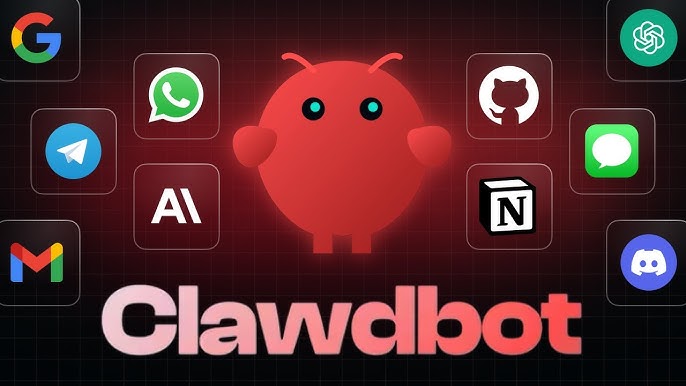
Openclaw also integrates with messaging platforms, webhooks, and local tooling, so automations can be triggered from places teams already work. That interoperability reduces friction and makes it practical to add AI assistance incrementally rather than forcing a full-platform migration. For many teams, that lowers the barrier to adoption while delivering measurable productivity gains.
Practical Use Cases and Early Results

Early adopters report tangible wins in three categories: time savings, consistency, and discoverability. Time savings come from automating repetitive tasks—meeting recaps, draft responses, report generation—freeing employees to focus on decision-making and creative work. Consistency improves when templates and business logic are codified in skills rather than left to manual execution.
Discoverability is a less obvious but equally important benefit: Openclaw can surface relevant documents, prior decisions, and action histories when prompted, reducing the time spent hunting for context. For example, sales teams use Openclaw to synthesize recent customer interactions and propose next steps, while product teams generate release notes from commit logs and ticket summaries.
Another common scenario is developer productivity: Openclaw can scaffold code, suggest tests, and triage CI failures based on pattern matching and historical fixes. That kind of integration reduces context-switching and shortens iteration cycles, particularly for smaller teams where each hour of developer time is expensive.
Security, Governance, and Deployment Considerations
Deploying an agentic platform like Openclaw requires deliberate security and governance. Running LLMs locally reduces data exfiltration risk, but administrators must still enforce least-privilege access, isolate execution contexts, and audit skill behaviors. Skills that accept untrusted input should be sandboxed and subject to validation to avoid unintended command execution.
Governance best practices include maintaining a curated skill registry, implementing role-based approvals for production skills, and logging all automated actions for traceability. Organizations should also rotate service credentials and treat integrations as first-class security boundaries. Combining these controls helps reconcile the productivity benefits of automation with enterprise risk management requirements.
Operationally, teams should start small: pilot one or two automations, measure impact, and iterate. This incremental approach surfaces edge cases early and helps stakeholders build trust in the platform before scaling to broader, more sensitive workflows.
Where Openclaw Fits in the AI Stack
Openclaw sits between raw LLM access and full SaaS automation suites. Its value comes from pairing contextual LLM reasoning with an extensible execution layer that interacts with local systems. For organizations that need control and flexibility—custom workflows, on-prem LLMs, or domain-specific data—Openclaw offers an attractive middle ground.
Openclaw’s ecosystem will matter as much as its core engine: an active skill marketplace reduces duplication of effort, while strong documentation and templates accelerate adoption. As more developers contribute skills, the platform’s utility will grow organically, creating network effects that benefit all users.
In conclusion, Openclaw represents a notable step forward in practical AI automation. By combining local LLMs, a modular skills framework, and strong integration capabilities, it delivers immediate productivity benefits while supporting secure, scalable deployments. For teams ready to automate routine work and prototype agentic workflows, Openclaw is worth evaluating as part of their AI toolkit.