Openclaw has rapidly evolved from a niche project into a versatile AI agent reshaping how teams automate work. Its combination of local LLM support, modular skills, and integrations enables practical automations across multiple domains. This article examines the platform’s transformation, the practical value it delivers, and the considerations teams must weigh before deploying it broadly.
How Openclaw Grew into a Practical Agent
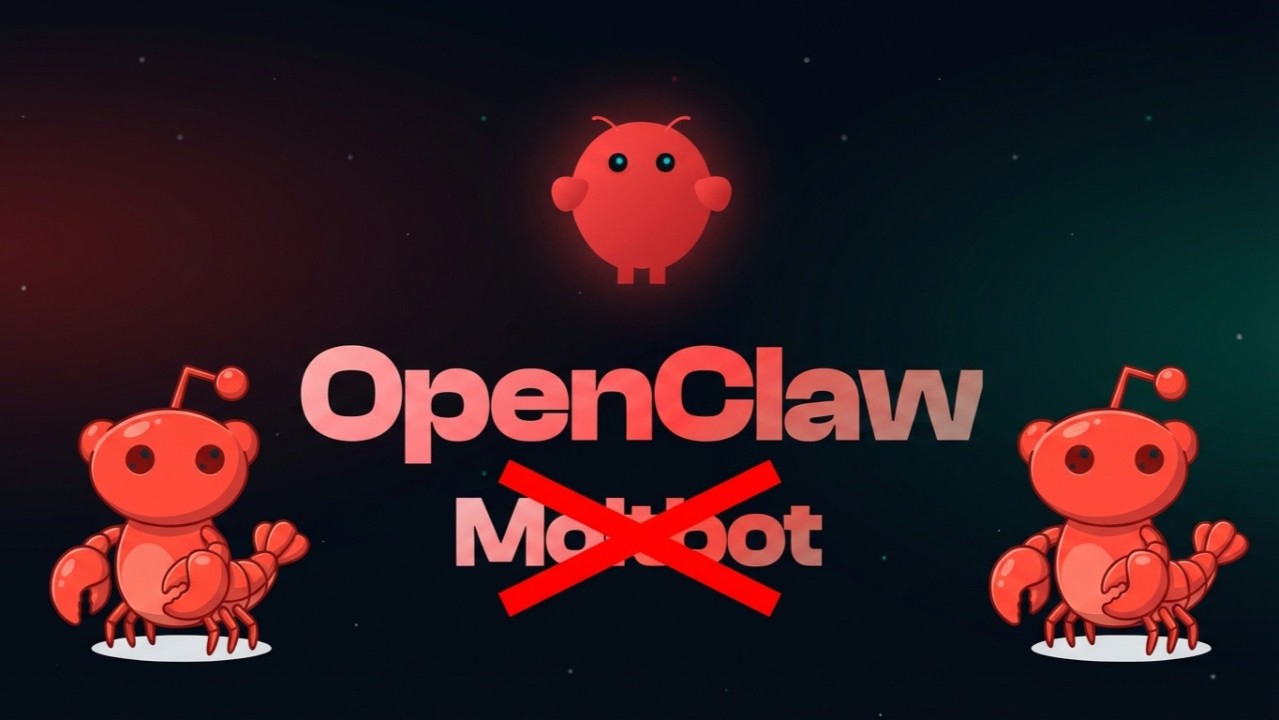
Openclaw’s development focused on making agentic automation accessible without sacrificing power. The platform pairs locally hosted large language models (LLMs) with a skill registry that lets users chain small, reusable actions into end-to-end workflows. This architecture reduces latency and keeps sensitive data in-house while enabling complex behaviors that were previously difficult to orchestrate.
Community contributions accelerated Openclaw’s maturity: developers published skills for email triage, calendar management, CRM updates, and content generation. These building blocks lowered the barrier to adoption, allowing teams to assemble useful automations quickly rather than build from scratch. As a result, Openclaw moved from experimental to practical in a short timeframe.
Additionally, the platform invested in extensibility and observability. Developers can author skills in TypeScript, extend integrations with webhooks, and instrument actions with detailed logs. These capabilities support real-world deployments where traceability and maintainability are essential for operational trust.
Real-World Use Cases and Measurable Benefits

Early adopters report tangible productivity gains across marketing, support, and engineering. In marketing, Openclaw automations generate content outlines, schedule social posts, and synthesize campaign performance into executive summaries. These automations reduce turnaround time for content production while preserving human oversight for quality control.
Customer support teams use Openclaw to triage tickets, draft suggested replies, and escalate complex issues to agents with contextual notes. This reduces average response time and frees human agents to focus on high-value interactions. For engineering teams, Openclaw can scaffold boilerplate code, summarize pull-request activity, and correlate CI failures with prior fixes, cutting diagnostic time.
Beyond immediate efficiency gains, organizations benefit from consistency and reduced manual error. Codifying business logic into skills ensures repeatable outcomes and easier audits. When combined with a controlled rollout strategy, these benefits compound as more workflows are automated across teams.
Risks, Governance, and Safe Deployment

While Openclaw provides clear advantages, deploying agentic software requires deliberate governance. Skills often require access to APIs and local resources; granting overly broad permissions can expose credentials and systems. Organizations should adopt least-privilege principles and isolate agent execution in containers or VMs to reduce blast radius.
Security controls are essential: disable automatic fetching of arbitrary remote content, maintain a vetted skill registry, and conduct code reviews for third-party contributions. Logging, alerting, and centralized telemetry help detect anomalous behavior early. For regulated environments, approval workflows for production skills and periodic security reviews are recommended.
Operationally, start small: pilot one or two automations with clear success metrics, iterate on prompt and skill design, and then scale. This incremental approach surfaces edge cases and ensures teams develop operational practices—credential rotation, monitoring, and rollback mechanisms—before expanding to critical systems.
In conclusion, Openclaw represents a meaningful step forward for practical AI automation. Its evolution from a community project into an extensible agent platform demonstrates the value of combining local LLMs with a modular skills ecosystem. When deployed with appropriate security and governance, Openclaw can deliver measurable productivity gains and enable new automation patterns that were previously impractical. Organizations that adopt an iterative, security-first approach will be best positioned to realize its benefits while managing risk.