Openclaw recently crossed a major popularity threshold on GitHub, attracting tens of thousands of stars and intense community interest. The repository’s visibility has prompted scrutiny: many expect a monolithic AI inside the project, but the reality is more nuanced. This article walks through what Openclaw actually contains, why it earned rapid adoption, and what users should understand about its practical capabilities and limitations.
What’s in the repository: orchestration, not a single giant model
At first glance, the Openclaw codebase looks like an orchestration framework rather than a standalone artificial intelligence. The repository provides the runtime, skill scaffolding, configuration, and integration adapters that let developers connect LLMs, message platforms, and system actions into repeatable workflows. In other words, Openclaw is the glue that composes model calls and deterministic operations into agentic behavior.
Developers will find components for skill definition, prompt templates, a lightweight API layer, and optional connectors for common services. The platform emphasizes modular skills—small units of functionality that can be tested, versioned, and composed—so the codebase prioritizes extensibility and maintainability. The actual LLM reasoning is typically provided by an external model (local or hosted), which Openclaw invokes rather than implements internally.
This architecture clarifies why the project attracts attention: it enables rapid composition of automations without forcing every user to train or host complex models. The community supplies many prebuilt skills and templates that accelerate prototyping, which explains the star count even though the repository doesn’t contain a proprietary LLM.
Why the project feels powerful despite having “zero AI” on its own

The apparent paradox—large popularity with no internal LLM—stems from Openclaw’s role as an integrator. By wiring models, retrieval layers, and execution steps together, the platform unlocks automation patterns that feel intelligent in practice. Users can leverage local LLMs or cloud models for reasoning while Openclaw handles context retrieval, memory, and deterministic side effects like API calls or file operations.
Skills and retrieval-augmented generation (RAG) make the agent’s outputs useful and grounded. A common pattern is to store domain documents in a vector store, retrieve relevant passages, and provide those passages to the model during prompt construction. That grounding reduces hallucinations and makes the agent’s suggestions more actionable, while the Openclaw code orchestrates the data flow and the final actions.
Another reason for rapid adoption is reproducibility: the framework codifies patterns that previously required engineers to rebuild stacks from scratch. Teams can focus on domain logic and prompt tuning rather than plumbing, and community-shared skills provide starting points. That practical productivity—rather than a single advanced model—drives perceived intelligence and widespread interest.
Limitations, risks, and practical advice for users
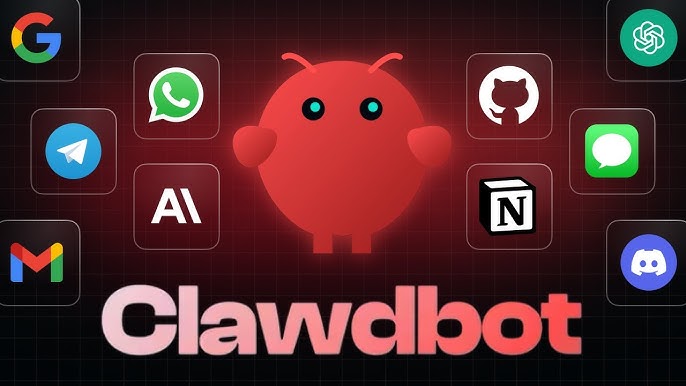
Despite its utility, Openclaw is not a turnkey intelligence that can be dropped into production without safeguards. Because the platform can execute actions and access systems, misconfigurations or unvetted skills introduce security and operational risks. Users have reported excessive model usage, runaway costs, and instances where poorly constrained skills caused undesired behavior.
To use Openclaw safely, follow several practical steps: run the agent in isolated containers or VMs, enforce least-privilege credentials for skills, and maintain a curated skill registry with code review and automated tests. Implement rate limits and budget alerts for hosted model calls, and prefer retrieval-grounded prompts that reduce token usage and improve factuality. Human-in-the-loop checks are essential for high-impact automations.
Transparency and governance are equally important. Treat skills as code with versioning and CI/CD pipelines, require security scans for dependencies, and keep detailed logs of model inputs and automated actions for auditing. These practices turn the repository’s orchestration capabilities into safe, maintainable automation rather than a source of unpredictable behavior.
In conclusion, Openclaw’s repository is a framework that orchestrates AI-driven workflows rather than a self-contained AI. Its popularity reflects practical value: speed of prototyping, modularity of skills, and seamless integration with LLMs and services. The right approach balances harnessing this productivity with disciplined security, cost controls, and governance—then Openclaw becomes a powerful enabler for LLM-powered automation, not a silver-bullet intelligence.