Openclaw has emerged as a prominent open-source AI assistant that runs entirely on local hardware, offering low-latency, privacy-preserving automation for both individuals and teams. The platform combines local large language models (LLMs) with a modular skills system to automate repetitive workflows and surface contextual assistance. This article explores Openclaw’s core capabilities, practical applications, and considerations for secure, scalable deployments.
Core Architecture: LLMs, Skills, and Local Execution
Openclaw’s architecture centers on three pillars: local LLM hosting, a composable skills framework, and integration adapters. By running models locally, the platform minimizes latency and keeps sensitive data on-premises, which is critical for teams with compliance constraints. Local execution also enables higher throughput for interactive tasks like drafting messages or summarizing documents.
The skills system is a defining characteristic: each skill encapsulates a discrete capability—parsing email, querying a database, or posting to a messaging service. Developers build skills in a modular way so they can be composed into multi-step automations. This design reduces duplication and accelerates development because teams can combine existing skills rather than coding complex pipelines from scratch.
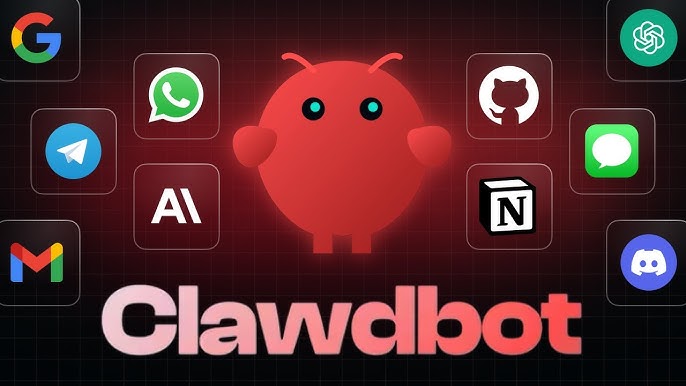
Openclaw’s integration layer connects skills to common tools and services—calendars, CRMs, and messaging platforms—allowing the agent to operate across an organization’s tech stack. The combination of local LLM reasoning and deterministic skill execution makes the platform suitable for a broad range of automation needs without sacrificing control over data or compute resources.
High-Value Use Cases and Real-World Benefits

Practical applications of Openclaw span marketing, support, engineering, and personal productivity. Common automations include inbox triage—classifying incoming mail, extracting action items, and drafting suggested replies—which reduces manual sorting and speeds response times. For meetings, Openclaw can generate agendas, produce concise summaries, and convert action items into task list entries automatically.
In customer support, Openclaw automates first-pass triage, routing tickets to the appropriate queue and drafting templated responses for human review. This improves SLAs and frees agents to handle complex issues. Engineering teams benefit from automated scaffolding and CI triage workflows, where the platform synthesizes logs, suggests fixes, and generates context for pull requests—shortening resolution times.
Beyond time savings, Openclaw delivers consistency and discoverability. Automations codify best practices into skills, ensuring repeatable outcomes across teams. The platform’s ability to surface relevant documents and prior interactions—using retrieval-augmented generation patterns—reduces time spent hunting for context and improves decision-making quality.
Security, Governance, and Operational Best Practices
Running agentic systems locally improves privacy but introduces operational responsibilities. Organizations should deploy Openclaw in sandboxed environments—containers, VMs, or isolated hosts—to limit blast radius if a skill contains vulnerabilities. Least-privilege access for API keys and credentials is essential: skills should be granted only the minimal scopes required for their function.
Governance around skills is critical. Maintain a curated skill registry with code review, security scanning, and approval workflows before promoting skills to production. Community-contributed skills accelerate adoption but must be vetted to prevent supply-chain risks. Auditable logs of automated actions and prompt outputs support traceability and compliance requirements.
Network controls and telemetry complete the security posture: use egress filters to constrain outbound connectivity, centralize logs into a monitoring system, and set alerts for anomalous behavior. For high-risk automations—financial operations, production changes—implement human-in-the-loop approvals to balance automation gains with operational safety.
Deployment Patterns and Scaling Considerations
Start with small pilots focused on high-frequency, low-risk workflows to validate value and uncover edge cases. Measure outcomes such as time saved, error reduction, and user satisfaction to justify broader rollouts. Incremental adoption reduces implementation friction and reveals governance concerns early without affecting critical systems.
Model choice is a practical consideration: smaller local LLMs may suffice for summarization and template generation, while larger models address more complex reasoning. Capacity planning—GPU, CPU, and storage—is necessary when scaling beyond a single user or team. Container orchestration or microVMs can help manage resource allocation and provide high-availability options for critical automations.
Integrating Openclaw into CI/CD and platform engineering workflows automates operational maintenance of skills themselves. Treat skills as code with tests, versioning, and deployment pipelines to ensure reliability and reproducibility as the automation catalog grows.
Conclusion: When Openclaw Makes Sense
Openclaw offers tangible benefits for teams that need responsive, private, and extensible AI automation. Its local LLM execution, modular skills, and integration capabilities make it a strong choice for organizations prioritizing data control and low-latency interactions. The platform’s value is maximized when deployments follow disciplined security, governance, and operational practices—starting small, measuring impact, and scaling thoughtfully.