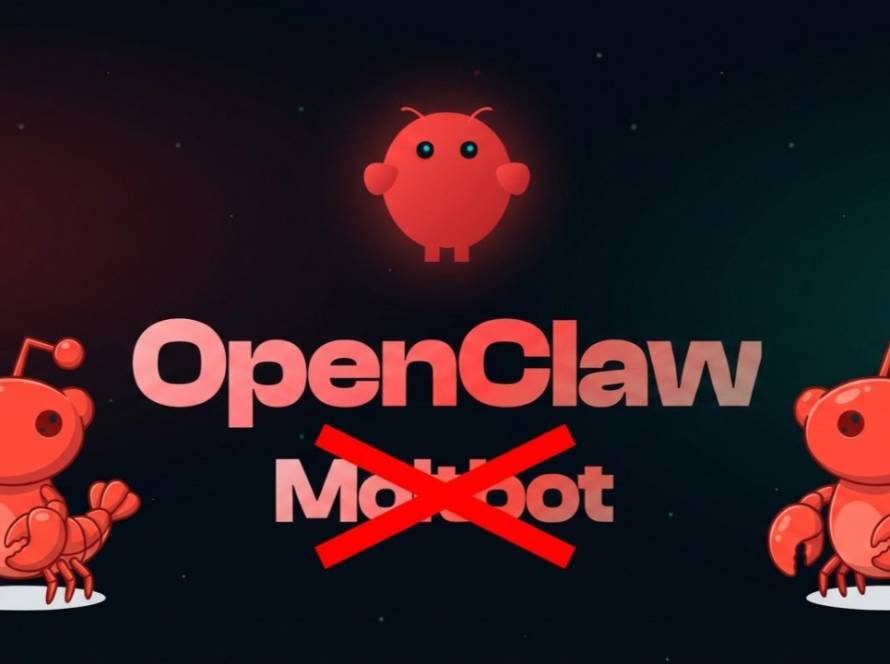
Openclaw has emerged as a prominent open-source AI automation platform that runs locally and stores context across sessions. The platform combines local large language models (LLMs), a modular skills system, and integrations to automate repetitive workflows. This guide explains how to set up Openclaw, what its core features deliver, and what the recent rebranding means for users and organizations.
Getting Started: Installation and Local Setup

Installing Openclaw begins with preparing the host environment: ensure a modern OS, Python 3.10+, and sufficient RAM and disk space for models and logs. For local LLMs, Ollama or comparable runtimes are recommended; choose a model that fits available CPU/GPU resources to balance latency and reasoning quality. Containerized deployments (Docker/WSL2) simplify dependency management and provide useful process isolation.
After prerequisites are in place, clone the official Openclaw repository and run the provided installation script to bootstrap dependencies and sample skills. Configuration focuses on pointing the agent at a local model endpoint, adding any messaging or webhook integrations, and securing API tokens in a secrets manager. Start with a single low-risk automation—such as meeting summaries or email triage—to validate the end-to-end flow before scaling.
Operational validation is essential: run smoke tests that exercise model calls, skill execution, and integration hooks, and monitor resource usage under load. Logging and centralized telemetry should be enabled from day one so that developers and operators can debug prompt behavior, skill failures, and integration errors. Treat the initial deployment as an iterative pilot with clear rollback steps.
Key Features: Skills, Memory, and Integrations

Openclaw’s skill system is the primary mechanism for modular automation. Skills encapsulate specific capabilities—parsing messages, generating drafts, or performing API updates—and can be combined into chains for multi-step workflows. This modularity reduces duplication and accelerates building practical automations across teams, from marketing outlines to developer CI triage.
Memory and retrieval-augmented generation (RAG) are core to Openclaw’s contextual power. The platform persists relevant context—user preferences, prior interactions, and document snippets—and retrieves it when constructing prompts for LLM reasoning. This reduces hallucinations, provides continuity across sessions, and enables automations that rely on historical context without repeated manual input.
Integrations with messaging platforms, CRMs, and productivity suites make Openclaw useful in real-world workflows. By connecting to Slack, Telegram, or email systems, the agent can surface summaries, inject tasks into trackers, and route customer issues. When integrating, apply least-privilege credentials and scoped service accounts so skills have only the access they need to operate.
Security, Governance, and Operational Best Practices
Agentic automation introduces distinct security considerations. Run Openclaw in isolated environments (containers, microVMs) and avoid running the agent with system-level privileges. Restrict skill permissions, require code review for any third-party or community-contributed skill, and maintain a curated internal registry of approved automations to mitigate supply-chain risks.
Network controls and monitoring are equally important: apply egress filtering so the agent cannot contact arbitrary endpoints, centralize logs in a SIEM for anomaly detection, and rotate credentials regularly. For high-impact automations—financial actions, production changes—implement human-in-the-loop approvals and audit trails to ensure accountability and traceability for automated decisions.
Governance also includes lifecycle management: version skills, run automated tests, and use staging environments for validation before promoting automations to production. Measure outcomes—time saved, error reduction, and user satisfaction—to build a business case and prioritize where to expand automation responsibly.
In conclusion, Openclaw is a powerful platform for practical, local AI automation when deployed with careful planning and governance. Its combination of local LLMs, modular skills, and memory capabilities delivers tangible productivity gains across functions. By starting small, enforcing strict security controls, and iterating with clear metrics, teams can harness Openclaw’s potential while managing the operational and security risks that come with agentic automation.